

Into the Green
The rain clocks in at around 11:45am every day, sometimes a bit earlier. We would bet on the timing of the first raindrops, and everyone was always within 20 minutes. The rain does not stop until around 6 in the morning. When it does subside, usually over morning coffee, the clouds wisp through the canopy trees like fingers through hair. The mud is deep and sticky—a relentless, living part of the forest. It steals your boots and your soul. Every step forward along the trail is a long slide back. The forest is so dense that you are barely able to move off the trail. If you straggle behind and scream out to the rest of the crew, your voice is not heard; the forest consumes your echoes.
This is the Chocó, one of the most biodiverse places in the world—home to over 10,000 plant species, 20% of which are endemic. It extends west from the Pacific slopes of the Ecuadorian Andes through Colombia and up into the Isthmus of Panama. Elevationally, it encompasses the lowlands up to around 2,500 meters in elevation. The forests in some parts of the Chocó are so dense as to be nearly impenetrable. A stark reminder of the power of nature is man’s feeble attempts to penetrate it. The Pan American highway is 19,000 miles long, extending from the north parts of Alaska to Tierra del Fuego, the Southern tip of South America. It is uninterrupted except for in one location: the Darién Gap, at the juncture between Panama and Colombia. The Gap is known to biologists and political scientists alike. To biologists it is one of the most diverse and unexplored places in the Americas. To political scientists it is one of the most dangerous migrant crossing routes. The reason for these two parallel realities is the Chocó—the Darién is the beating heart of it. The interruption of the Pan American highway is not for lack of trying. It was attempted in both 1971 and 1992, but both times it could not be completed because of both environmental concerns and difficult working conditions: the mud, rain, and dense forests made it nearly impossible for construction equipment to operate.
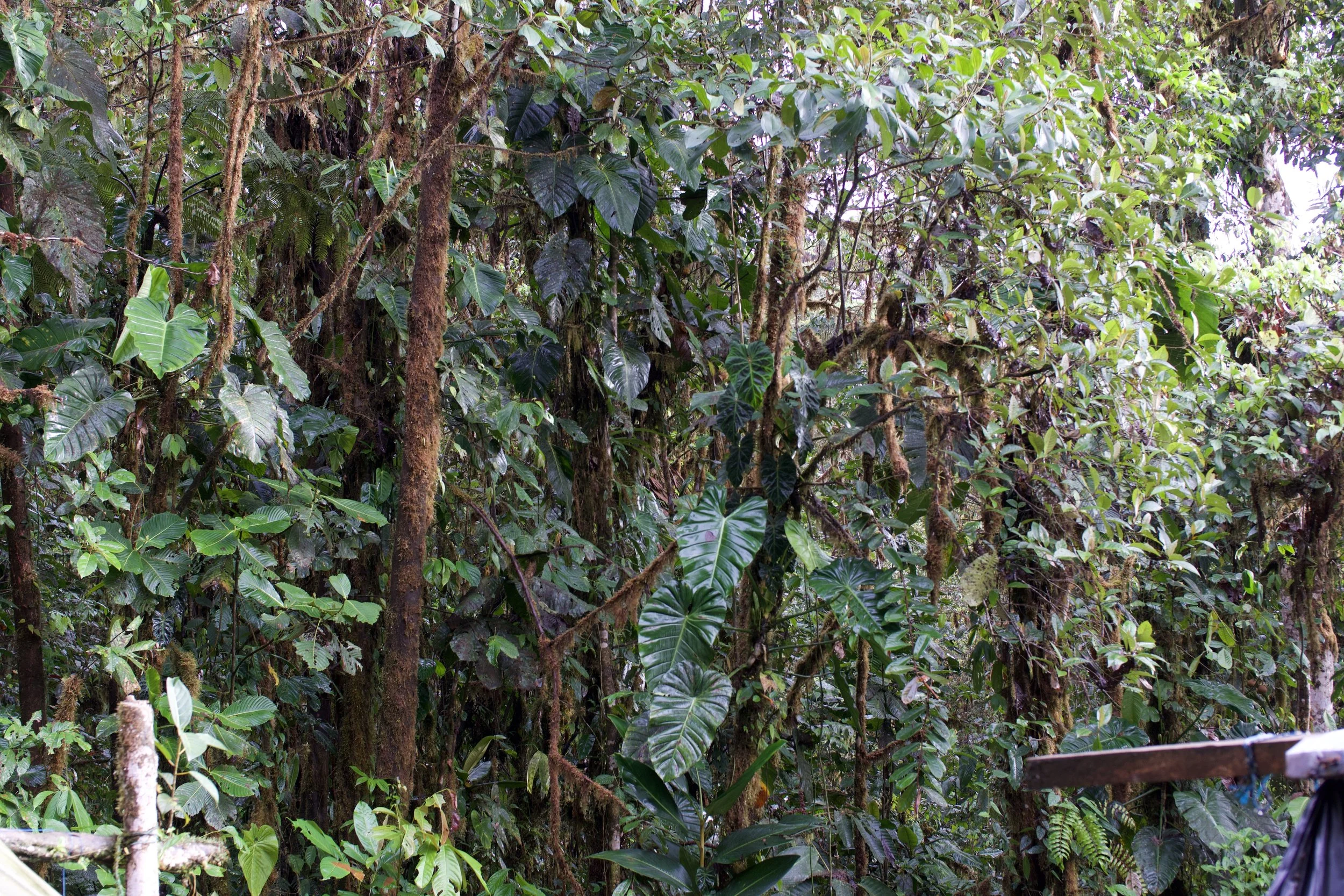
Dense forest of the Chocó. Trees peppered abundant epiphytes and hemiepiphytes in Reserva Río Manduriacu.
This past month I went on an expedition to collect and document the ferns of the Ecuadorian Chocó, focused on the northwestern region of the country. It was a 10-day expedition and included Dr. John Clark, botanist at Selby Botanic Garden; Magsy Lombard, botanist and graduate student at University of Edinburgh; Emilio Trujillo, botanist and graduate student at La Pontificia Universidad Católica del Ecuador (PUCE); and Yazan Aboushi, a freelance filmmaker. It was an unassuming crew, each individual quite unique, bonded only by our passion for plants and exploration. We worked with local guides, community members and folks at the Ecominga Foundation who helped make it all possible.
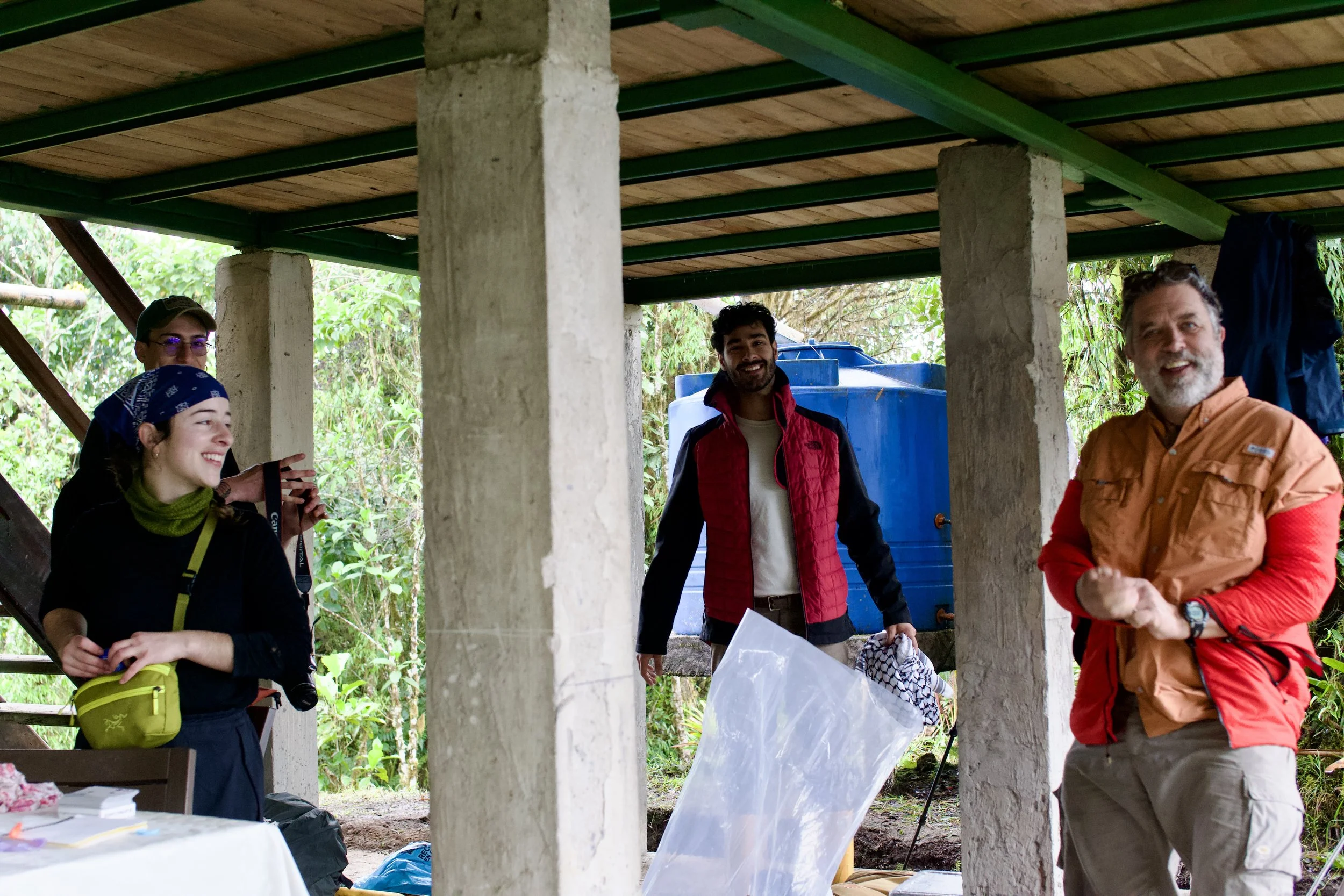
The botanical crew. Left to right: Magsy, Emilio, Yazan, John.
The trip was broken up into two parts. First, we stayed two nights in Reserva Dracula in the province of Carchi, bordering Colombia. On January 12th we departed Quito for a 10 hour drive. We had an early morning getting into the van by 5:30am. Danilo, our driver, had decked out his van, so the lights from his electronic radio head unit relentlessly flashed reds, greens, and yellows. The raindrops on the window made a perfect bifurcating phylogeny as they dripped down; for every centimeter they traveled a new speciation event occurred. Quito is nestled in an inter-Andean valley, meaning it is relatively dry compared to the western slope of the Andes. This is because the warm moist air flows from the ocean inland and as it rises on the western side of the mountain it cools and rain precipitates. The drier, cooler air then flows over the mountains into the valleys where it sinks as it warms up, but very little moisture is left in the air leaving the valleys dry. A great dry place to start a city, not the best for vegetative life.
As we approached our destination the roads became more treacherous. The winding roads are sharper than any switchback in the U.S., each turn instills a fear of what was around the corner; hopefully nothing, but every once in a while it was a large truck barreling down the mountain—fortunately, Danilo was an expert on these roads. We arrived at Reserva Dracula—named after an orchid that bears the same genus name. Our campsite was quite posh, we had an elevated platform with a roof, and when the rain let up you could see the iconic Cerro Golondrinas.
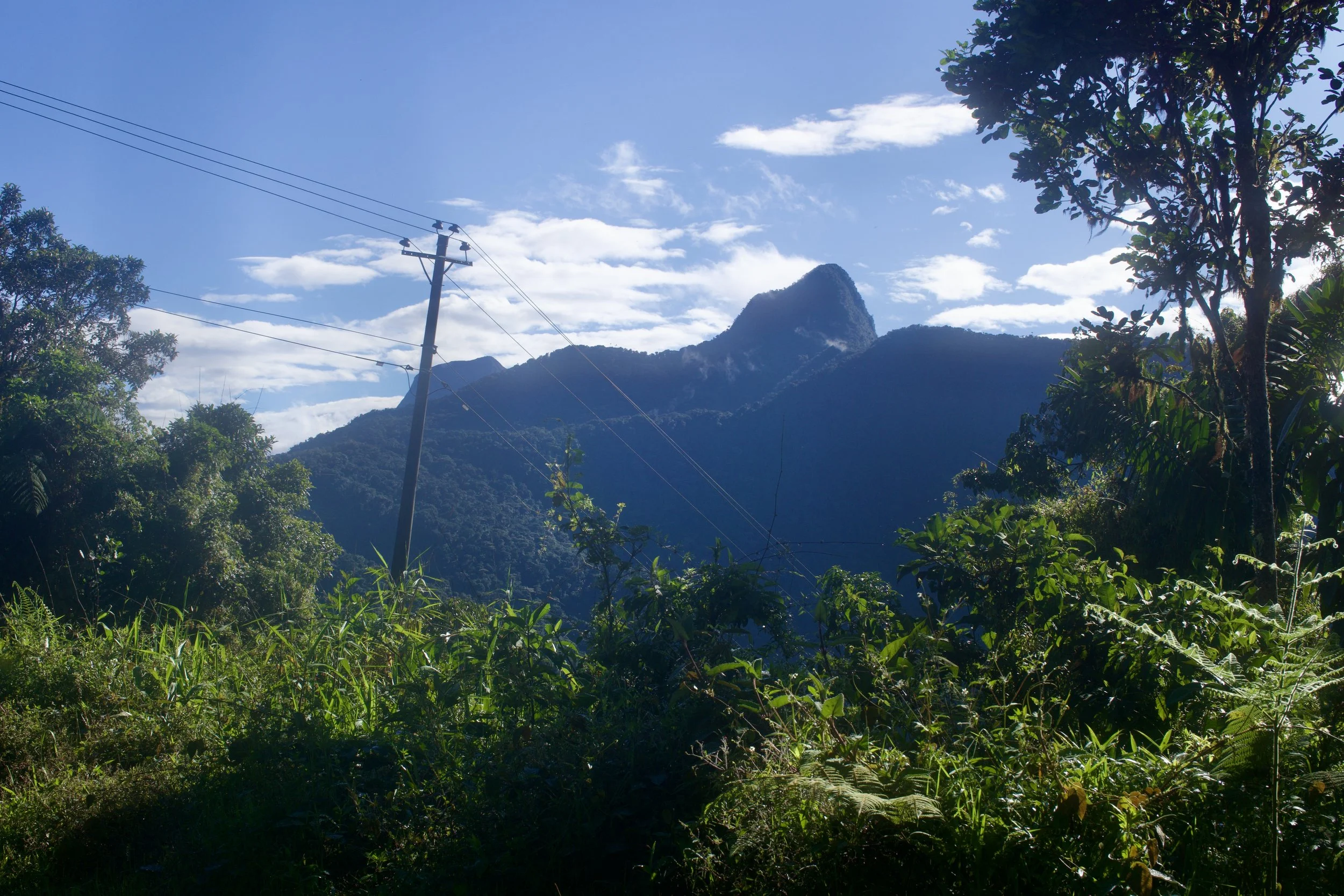
Cerro Golondrinas on a clear Chocó morning.
The goal of the expedition was to collect plants, so we quickly set up our tents and rushed to grab the final hours of daylight. It was raining when we arrived around 3pm, but we went fast through the trail. John and Magsy grabbed the herbaceous flowering plants, focusing on Gesneriaceae and Melastomataceae (two diverse groups of flowering plant herbs). Emilio and I snagged the ferns. The sheer diversity of these forests is overwhelming. Especially the first day. Everything is new when you have not collected a single plant yet. If the goal is to document everything, you must start somewhere. Wet and a bit chilly—we were at 2,500 meters in elevation—we trekked back and started to process everything. This is fun but slow, meticulous, and tiring. Each plant is photographed, tagged with a specific collection number, and pressed into herbarium specimens. This is like pressing a flower in between a book, but a bit larger and with more information. The pressing occurs between two pieces of newspaper. It is always comical to take a peek at the paper while pressing —in this case John brought his favorite newspaper “West Coast Women” which included random ads for life coaches, new mother-daughter cupcake stores, and other South Floridian goings on. Once the plant is placed in the newspaper, it is then labeled with the appropriate number and pressed tightly so the plant dries. The issue is that nothing dries in the Chocó. So, to inhibit molding we had to drench the specimens in alcohol; this inhibits fungal and pathogen growth, but the tradeoff is that the specimen’s color darkens and DNA cannot be extracted from the specimen in the future. Once all the specimens are pressed we then take detailed field notes about where the plants were collected, recording information such as their geographic coordinates, elevation, growth habit, co-occurring plants, and any further information. This is the metadata that becomes associated with the plant in perpetuity. In just an hour on the trail we collected around 20 fern species, the total processing took about 3 hours.
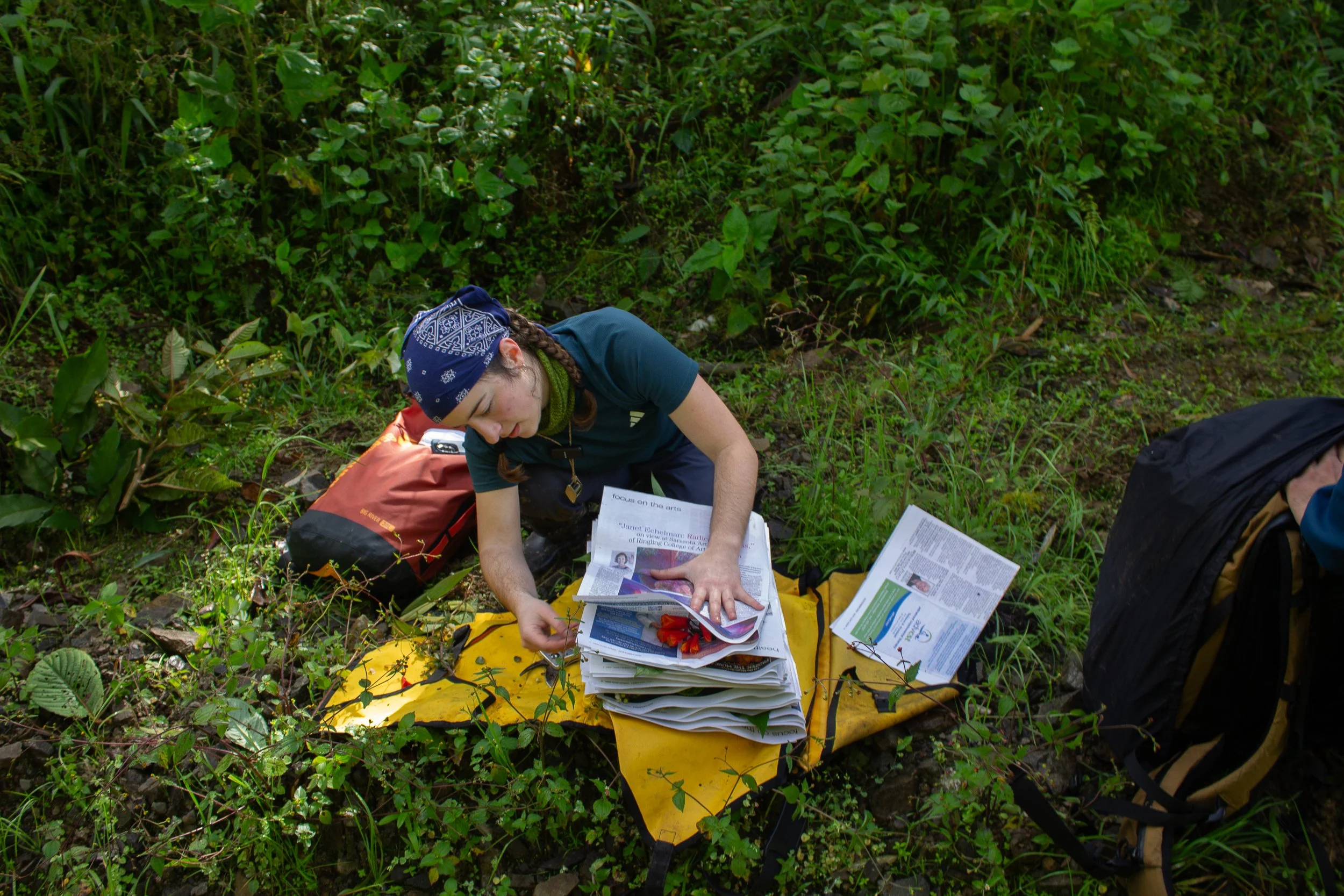
Magsy pressing plants in the field.
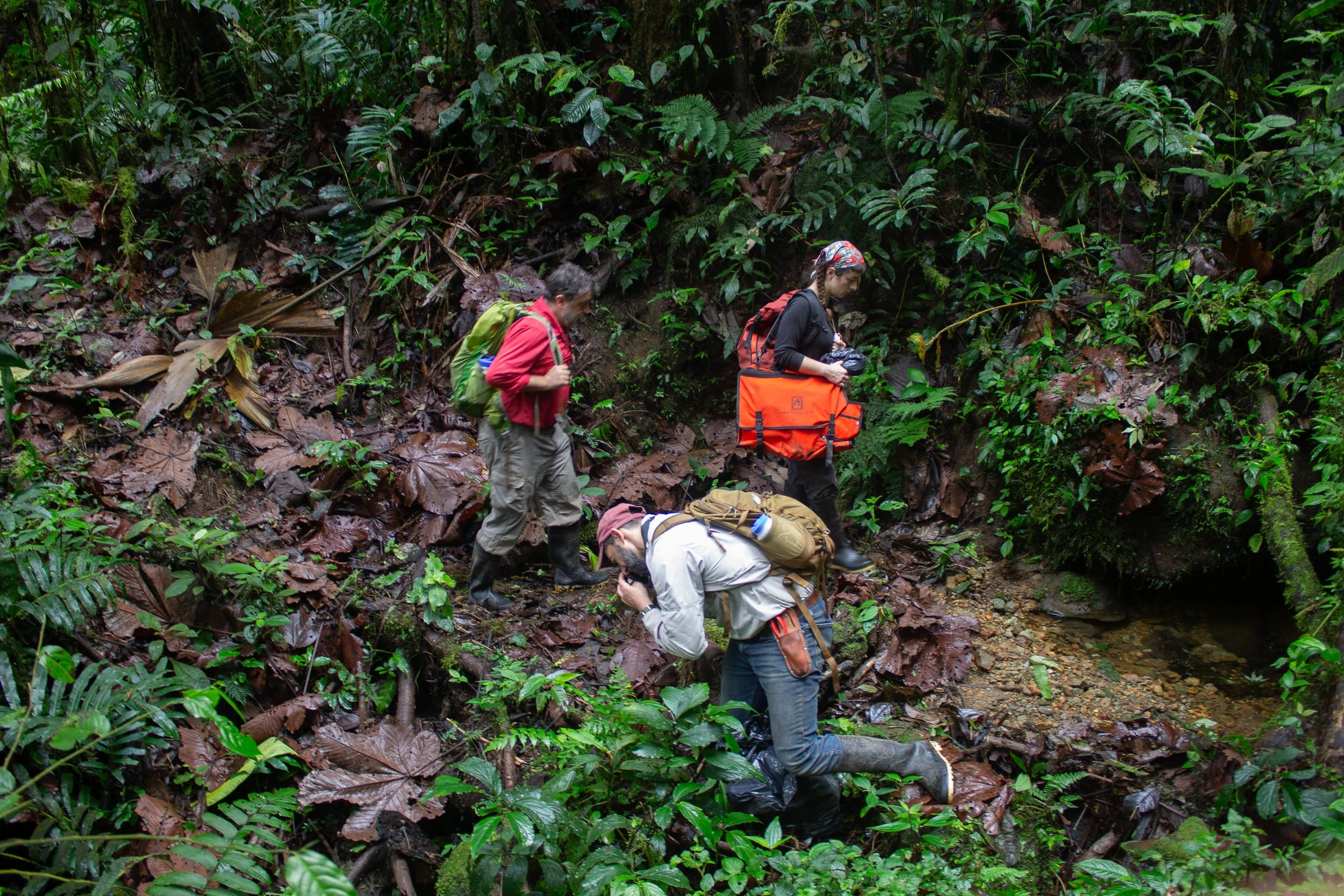
John, Magsy, and me traversing a muddy stream bed.
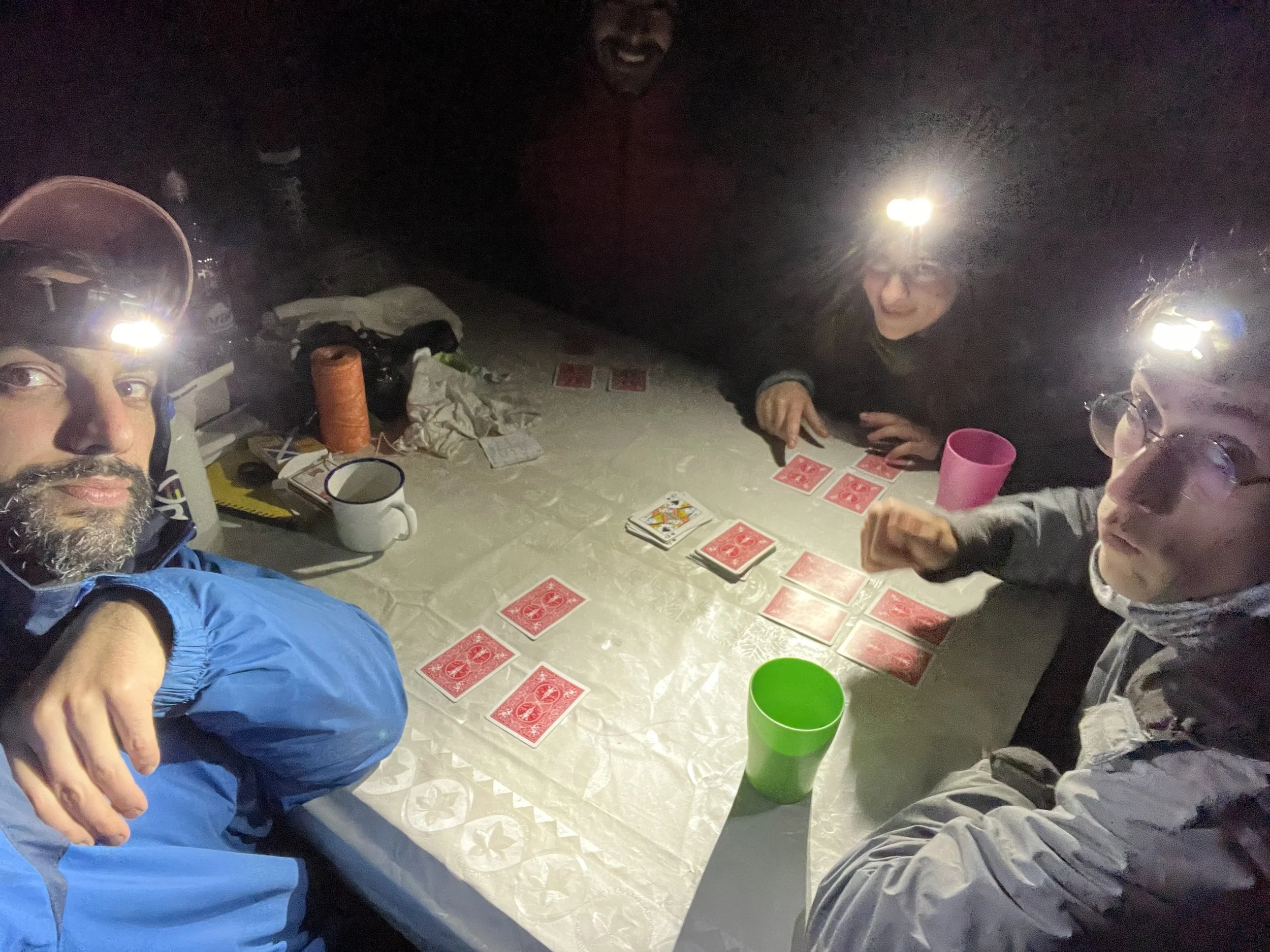
The downtime during field expeditions is when relationships are built. Playing cards with your headlamp over a glass of cheap rum cultivates a sense of camaraderie that is hard to match. Like the clockwork of the rain, after dinner each night the bottle was set on the table and the cards were dealt. The next day we rinsed and repeated.
In Reserva Dracula, one plant that stood out to me was one that I have seen many times before, Bomarea, a monocot vine that is related to lilies. There are about 250 species of Bomarea, they all have gorgeous pendulous flowers with sepals and petals relatively undifferentiated (sometimes called tepals). Over dinner John mentioned that their leaves are resupinate—a term usually used for flowers which means they contort 180˚ during development. Many orchids often have resupinate flowers. Resupinate leaves? This was something I had never seen before or even heard of. I ran to the plant and using my headlamp carefully examined the foliage. It was fascinating. It is not just that the leaves are turned 180˚ but the developmental upper side of the leaf—usually waxy and adapted to capture sunlight—resembles what I would traditionally consider the lower side of the leaf, and vice versa. In fact, the anatomy of the leaf has also seemed to flip, according to Lyshede (2002) the layer of cells used to capture light called the palisade layer (usually on the upper side of a leaf) is found on the lower side of Bomarea leaves. The mechanism of resupination is also fascinating, the leaves of Bomarea and their relatives always seem to twist in the same orientation according to Chitwood and colleagues (2012). The leaf rotation seems to be a response to light dynamics too, some Bomarea can even rotate their functionally-top lower surface towards a light source leading to an untwisted or a double twisted leaf (Hill 1939).
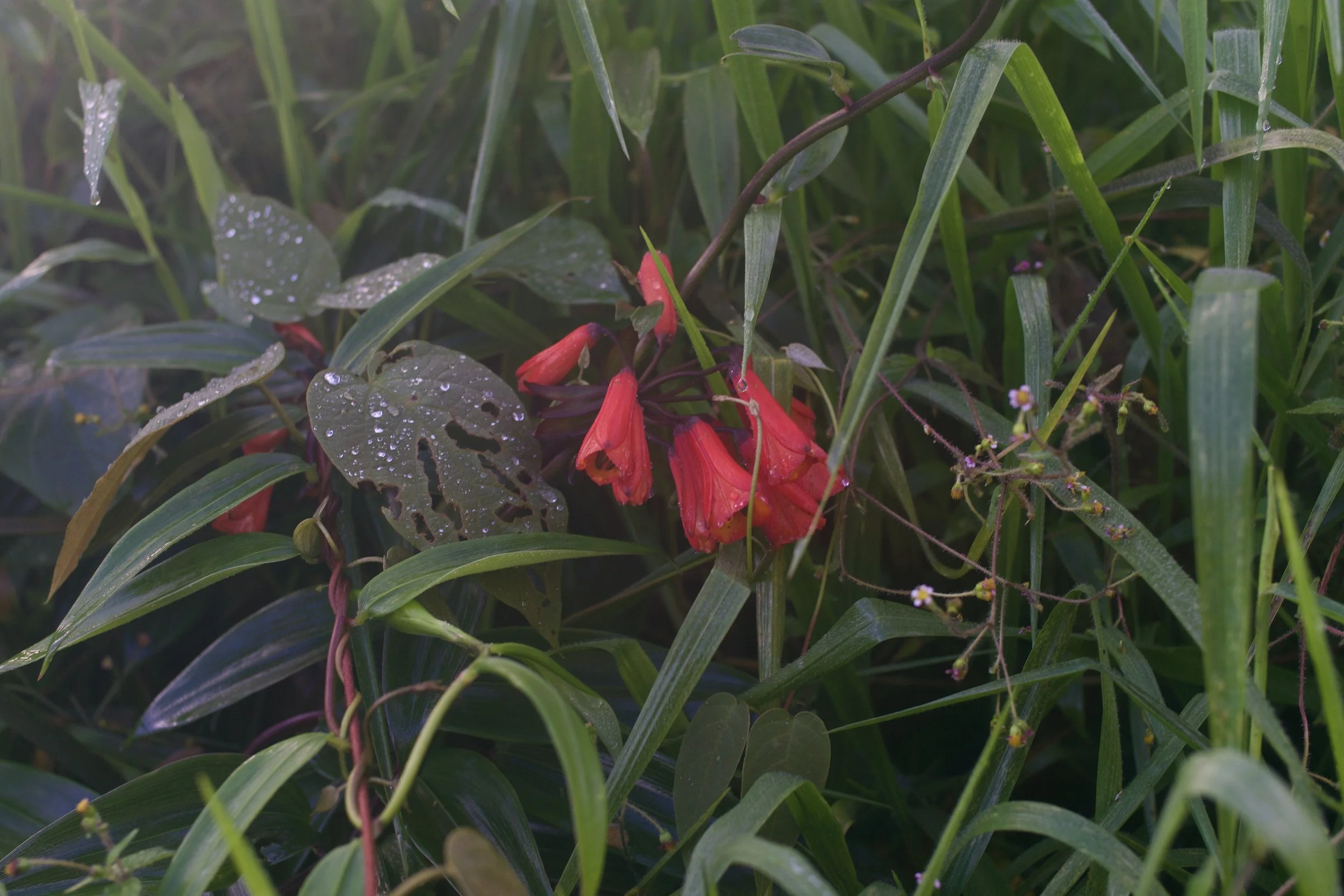
Flowers of Bomarea at Reserva Dracula.
Why this lineage evolved down this route of resupination and leaf reorganization is unknown. Indeed, there is no “reason” for the leaf to turn like this, surely any adaptation to increasing light exposure could have been facilitated by keeping leaf arrangement in the “normal” orientation. But, that's not how evolution works. When a lineage starts to go down an evolutionary path and the lineage finds a local fitness peak to climb, natural selection will continue to shape the lineage down that trajectory. Just like the Panda’s fake thumb, it is these odd quirks of nature that provide evidence for evolution. Why would a leaf be created upside down and twisted around?
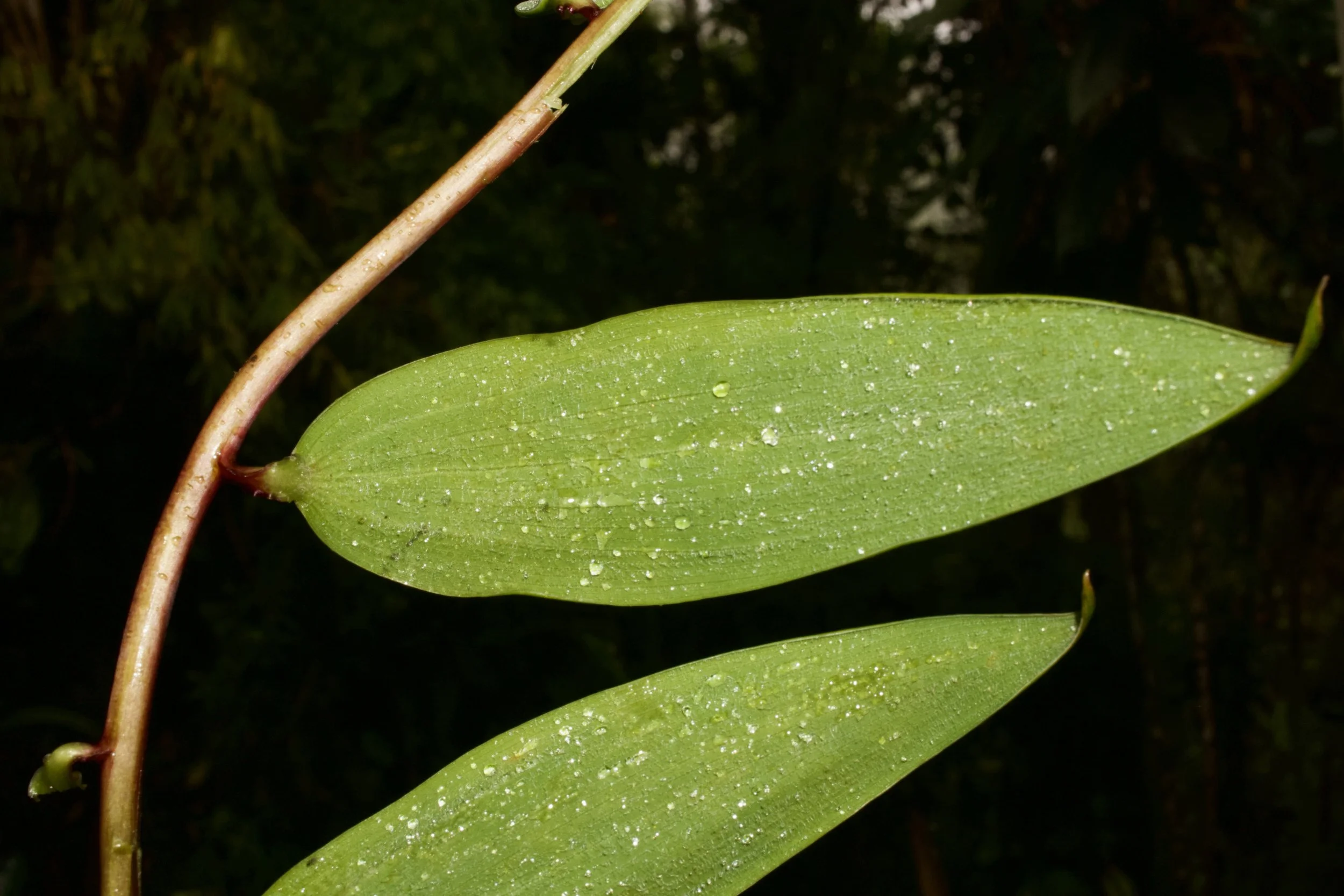
The upper (adaxial) side of the leaf that has evolved to be the “functional lower” side of the leaf. Note the twisted petiole.
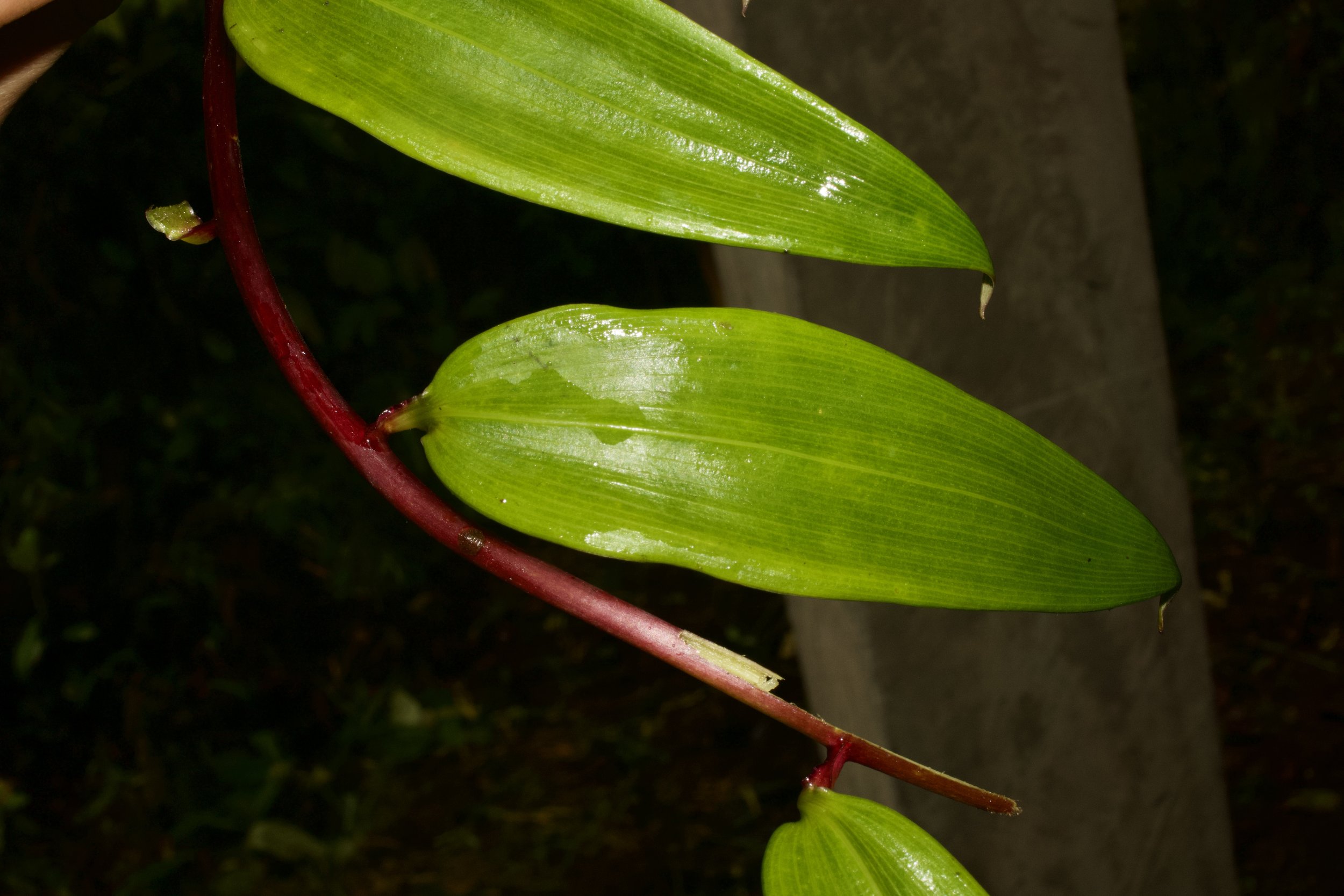
The lower (abaxial) side of the leaf that has evolved to be the “functional upper” side of the leaf. Note the twisted petiole.
The second site was more remote. We drove from Reserva Dracula to Reserva Río Manduriacu in the province of Imbabura. Funny enough, from Dracula, we could actually see our destination in Manduriacu over the horizon; however, to get there wasn't a straight shot. We couldn't go straight through, but had to go down back through Quito, and then over the Andes and back north. We arrived late, around 7pm and stayed at our guide Jimmy’s house for the night in a small village. The next day we set off on our trek to the campsite. The hike was five hours straight uphill in that grueling mud, of course it rained. It took nine porters and three mules to help with our gear. The hike up was spectacular. We collected 50 species of ferns just along the trail to the campsite.
We thought our site would be open and that we would be constantly rained on. But to our surprise the site had several tarp-roofs which made everything relatively dry and easy. There was one platform that was the remnant of an old house that was built there by the previous owner of the land. All that was left was the foundation—the forest took the rest. We also had some old mattresses that were splayed out on the foundation. They were moldy and moss-covered but we put our tents on top of them and it made for a quite comfortable stay. The floor was full of holes. In fact, Jimmy was actively adding floor boards with a hammer when we arrived.
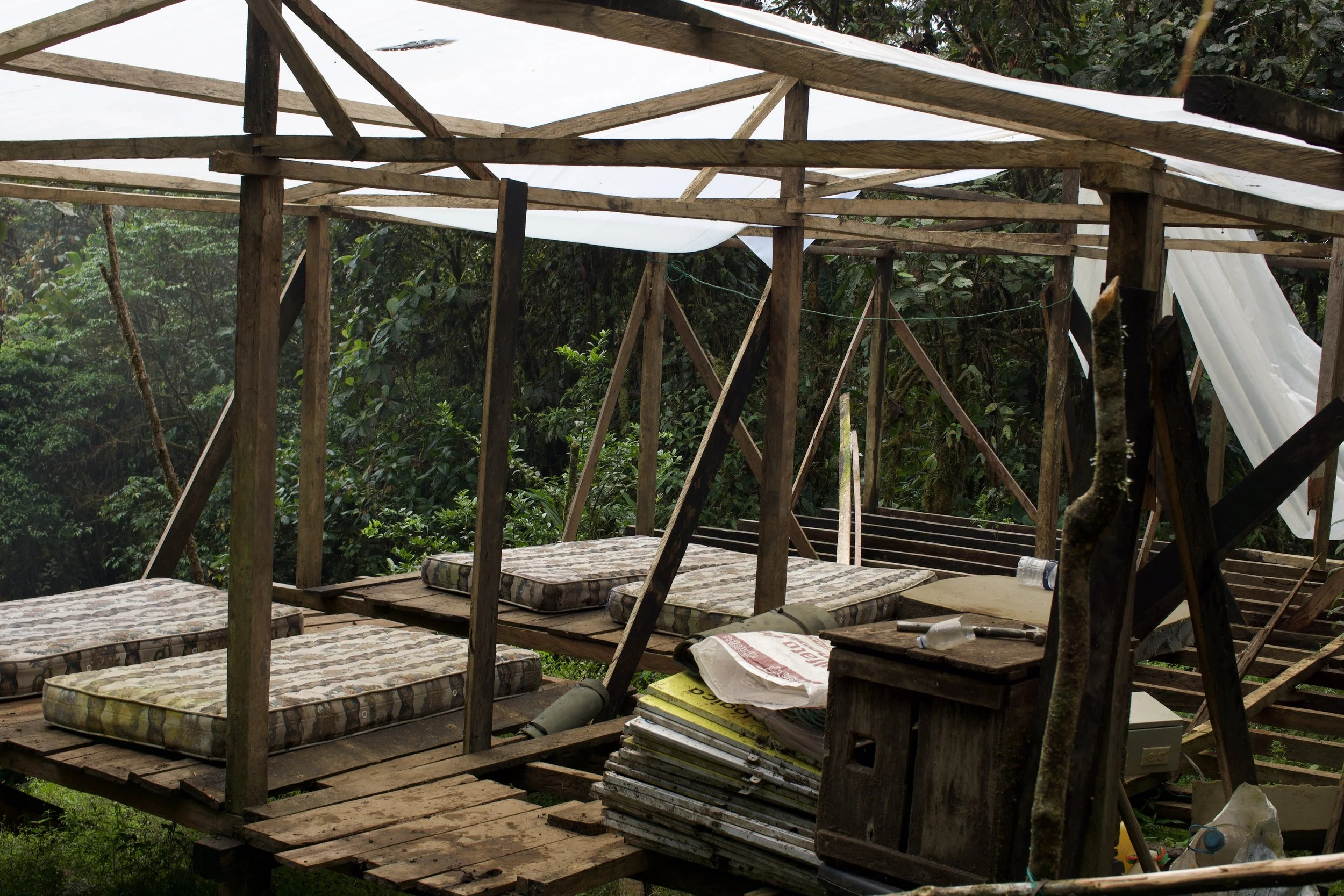
The accommodations at Reserva Río Manduriacu.
Reserva Río Manduriacu was slightly lower in elevation, around 1,500 meters so it was warmer than Dracula. The second day we woke up and hiked about 4 hours straight uphill to an older campsite. It was steep, slippery, and wet. But, we collected about 30 different species of ferns. On the way up we found an amazing Eupodium, a tree fern in the Marattiaceae. This family is quite spectacular, producing plants with leaves that can be meters long. They are also related to some of the most ancient tree ferns, Psaronius, which ruled the landscape some 350 million years ago. This species had a leaf that was massive—the petiole was the length of my leg and about as thick as a coffee mug, and the lamina itself was dissected 4 times. We decided to tag it and photograph it, but leave it on the trail to collect it when we returned.
Going up was difficult and slow. Coming down was fast but treacherous. We mostly slid down the mountain. What made it harder was carrying the beach-umbrella-sized Eupodium leaf. We made it down and spent the next 4 hours processing the plants.
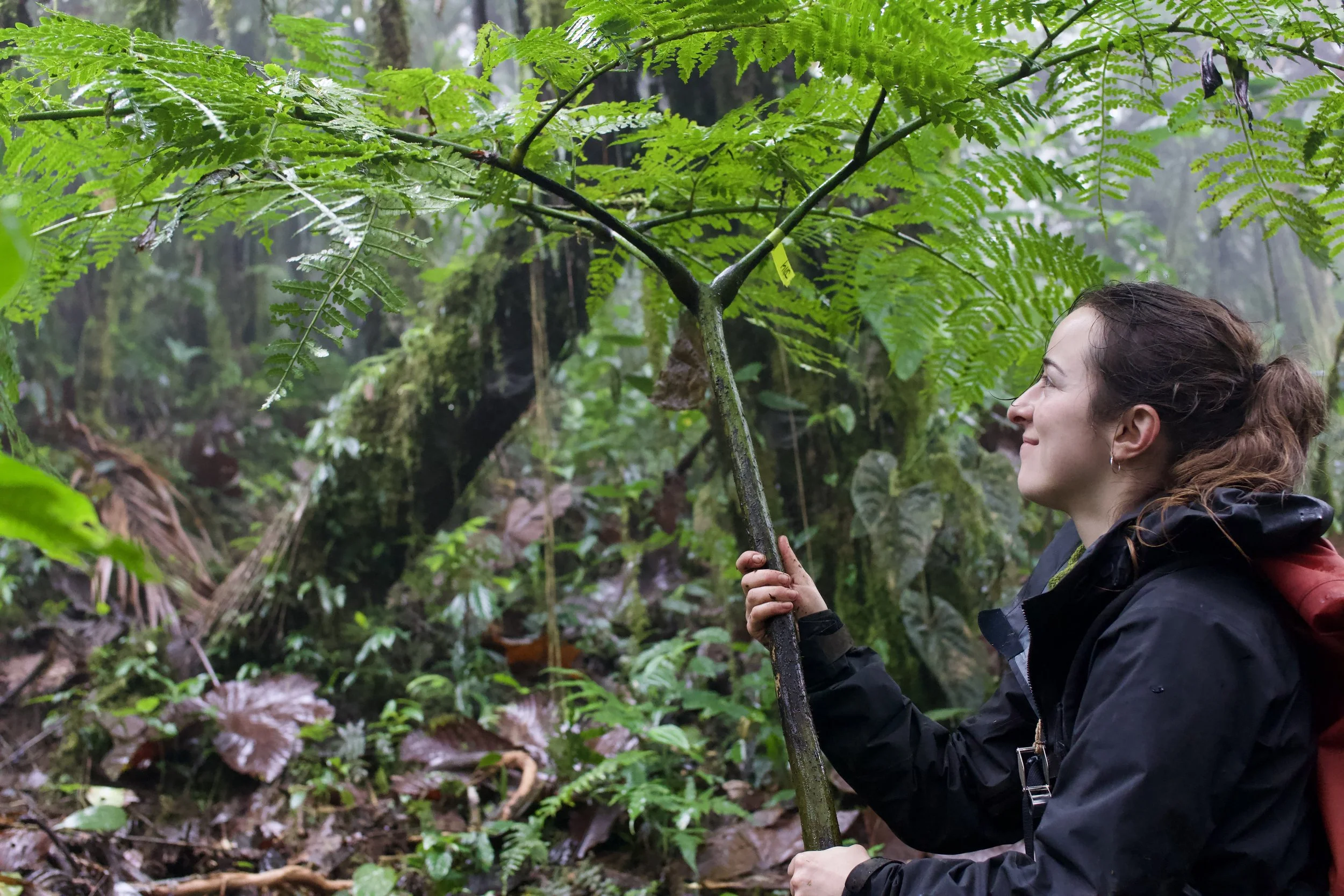
Magsy with the beach-umbrella sized Eupodium leaf.
Jimmy’s wife, Lady, was our expedition chef at Manduriacu and that night she made a delicious soup full of potatoes, cheese, and pasta. I think it was called sopita de queso. It was warm and cozy, exactly what we needed after two days of intense hiking and collecting.
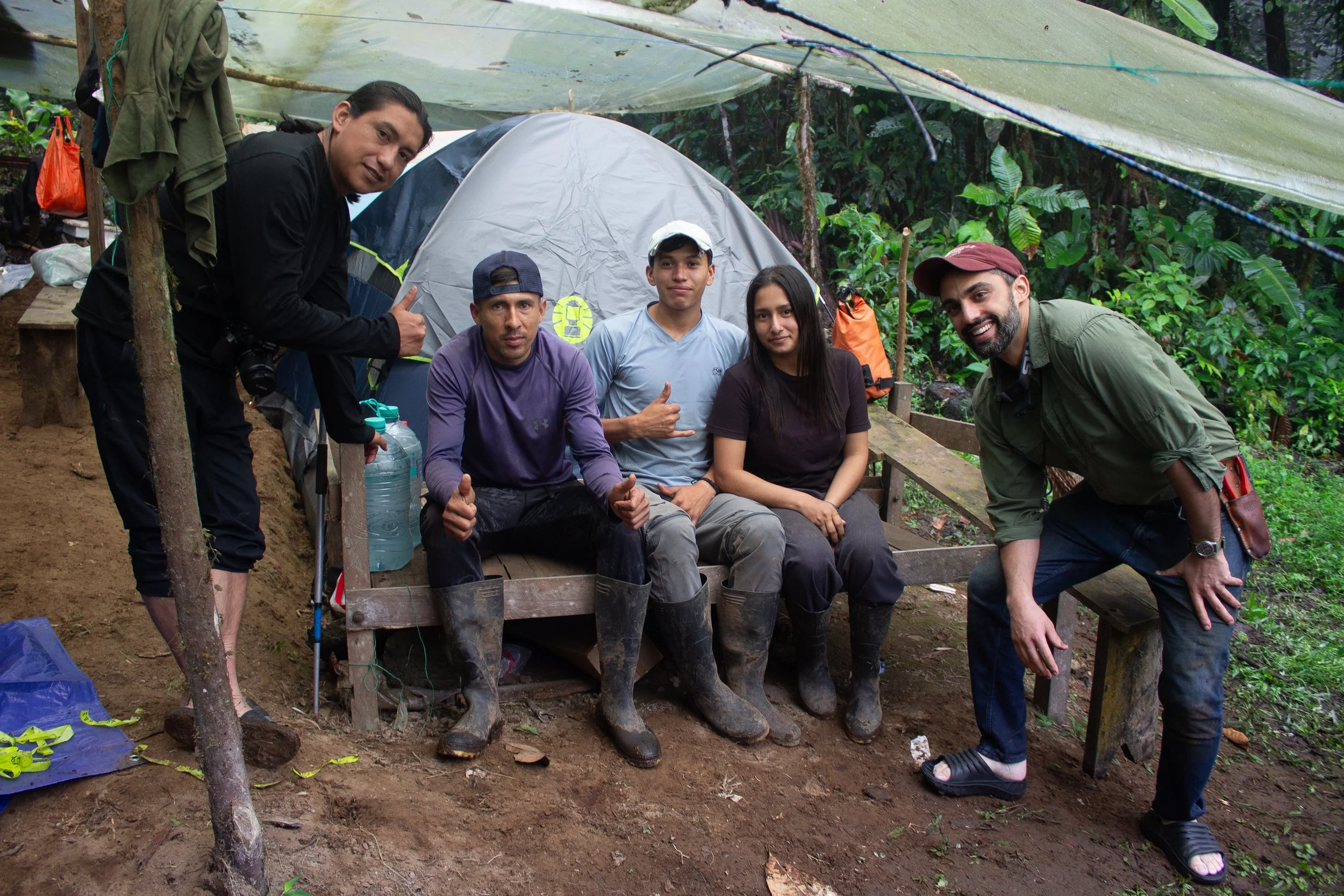
Our guides Mark, Ronal, Jimmy, Lady, and I hanging out at our campsite in Reserva Río Manduriacu.
By this point we had a good system of processing going. Magsy and John would process the flowering plants and Emilio and I would process the ferns. Emilio, who knew very little about ferns before the trip, became enthralled and very enthusiastic about them. So much so that we added a nightly ritual to our rum and cards. After dinner, Emilio would pull out his phone and we would make short recordings of the descriptions for particular genera that we collected that day. The list grew into an impressive audio journal. The evenings were also packed with “herping,” going out at night in search of frogs, snakes, lizards, and the like. I often recused myself from these outings—the daytime plants were enough for me, and I was often a bit too tired in the late evenings. I woke up one day to realize that Magsy and Emilio brought back a tree fern growing down by the stream. It was a rare tree fern named Alsophila esmeraldensis, a rare tree fern known only from a few collections (my colleague Nico Zapata helped ID the images I sent). In the process of collecting this fern we made a cross section of the stem which had a beautiful vascular arrangement called a polycyclic dictyostele—with outer and inner bundles. I was really excited about seeing this vascular system because it is what I study in my lab. I kept talking about how cool and fascinating polycyclic dictyosteles were, and by the end of the trip everyone was joking about fern vascular architecture. Jokes aside, the polycyclic dictyostele is a beautiful pattern and the contrast of the dark vascular bundles against the backdrop of the pale cortical tissue in the tree fern stem makes for a gorgeous illustration. So gorgeous, in fact, that Emilio decided to get a tattoo of it to add to his botanical sleeve! It is the highest form of art, in my opinion.
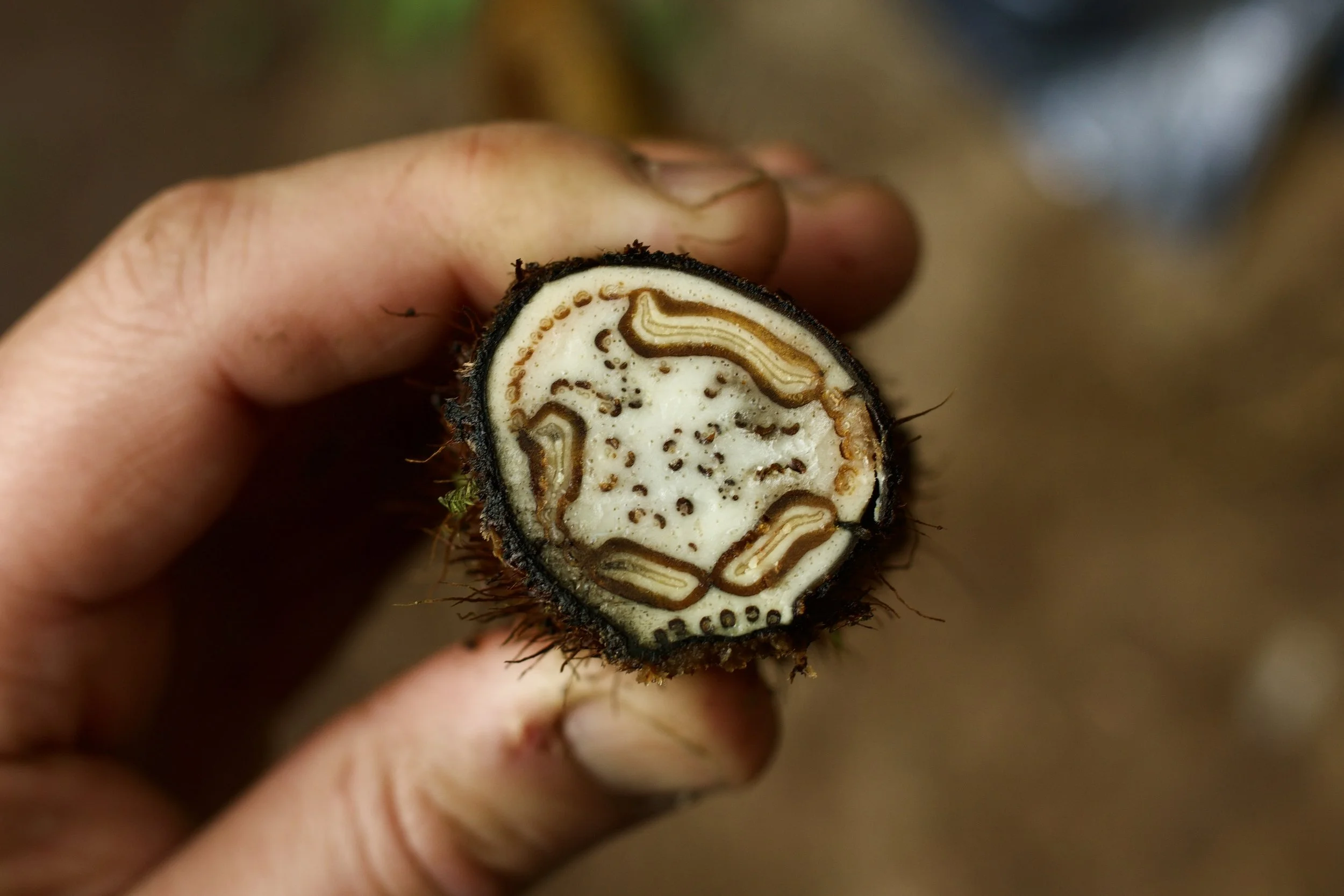
Rhizome cross section showing the vascular architecture of Alsophila esmeraldensis.
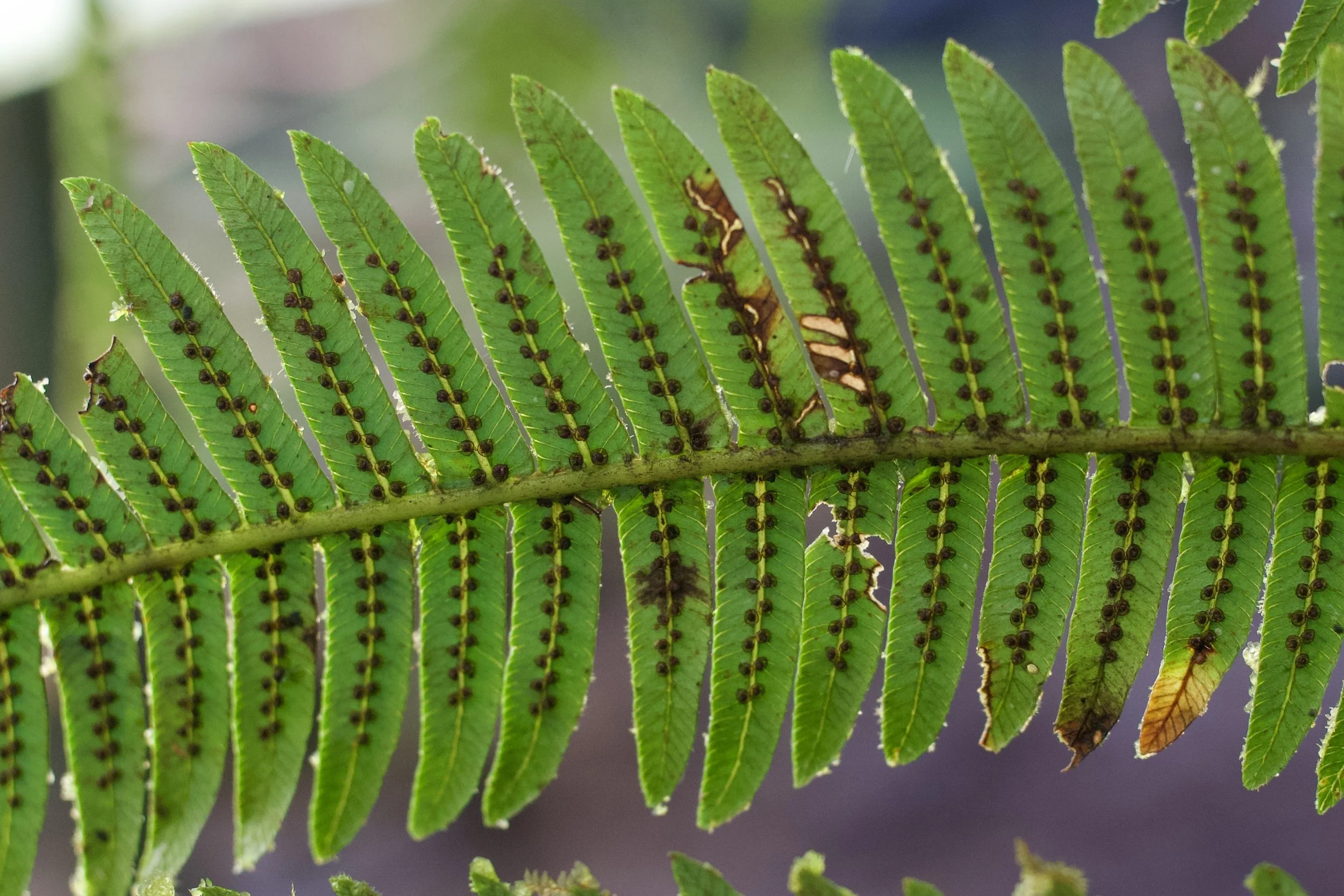
Leaf underside showing the beautiful sori (where spores are produced) of Alsophila esmeraldensis.
In total, with just 6 full days of collecting, we were able to sample over 150 fern species. This is quite impressive if you consider that there are around 300 species of ferns native to the entire United States. Once we returned from the expedition we spent five days in the PUCE herbarium processing the specimens. The alcohol-drenched plants were placed into a large drying cabinet, which is essentially a glorified slow-roast oven (usually set to 60˚ C). Labels with the metadata are made and placed with each plant and then employees of the herbarium carefully mount the plants onto archival paper—a process that is as much artistic as it is scientific. The labels are adhered to the pages and the plants are filed away in their respective cabinets.
The plants will be deposited in several herbaria—at PUCE, Selby Botanic Gardens, and the University of Tennessee Knoxville. The plants that live in these remote places are now documented in perpetuity within each herbarium. Herbaria are like plant libraries. These institutions, which are found all over the world, are the preservers of Earth’s biodiversity. Herbarium specimens are not just collecting dust in the cabinets, but are used at the cutting edge of research. Leaf tissue from herbarium specimens can often be used for genomic or biochemical analyses, metadata can be leveraged for ecological and climate change studies, and some are using non-destructive imaging techniques like CT scanning to peer inside herbarium specimens without destructively sampling. They are a wealth of information. Not only are they important for these fields, but they are also important for understanding and documenting biodiversity. Between 1970 and 2010, 84% of newly documented plant species were described by leveraging herbarium specimens. Vouchered plant specimens and herbaria are more important now than ever given the current biodiversity crisis. Climate change and, more impactfully, habitat destruction are leading to global biodiversity loss. In many cases plants that were once living in specific localities are now extinct and are only still documented in herbaria.
An expedition like this is the cornerstone of biology. To understand the world we have to know what is there. We have to document which species exist, where they live, and what they look like. If we are to conserve biodiversity, this is the first step. It may seem like simple work, but its ramifications are as innumerable as the organisms in the Chocó.
References and further reading
Bebber, Daniel P., et al. "Herbaria are a major frontier for species discovery." Proceedings of the National Academy of Sciences 107.51 (2010): 22169-22171.
Chitwood, Daniel H., et al. "Conflict between intrinsic leaf asymmetry and phyllotaxis in the resupinate leaves of Alstroemeria psittacina." Frontiers in plant science 3 (2012): 182.
Hill, Arthur W. "Resupination studies of flowers and leaves." Annals of Botany 3.4 (1939): 871-887.
Lyshede, Ole B. "Comparative and functional leaf anatomy of selected Alstroemeriaceae of mainly Chilean origin." Botanical Journal of the Linnean Society 140.3 (2002): 261-272.