

Bracken’s sweet (re)purpose
I have always been interested in the people that plants are named after - learning more about them also helps me remember the plant names. One that has stuck in my mind is August Wilhelm Dennstedt. His name was first uttered to me in a thick German accent by my undergraduate research advisor David Barrington during a field course in Costa Rica. Dave isn't German, but August was. Like many 18th century contemporaries, he was a physician as well as a naturalist. Dennstedt’s passion was botany and seemed to be associated with the garden and palace at Schloss Belvedere, in Weimar Germany. Schloss Belvedere was a hunting lodge and “pleasure palace” not to be confused with the much larger and renowned Belvedere Palace in Vienna, Austria. Dennstedt was a contemporary of Johann Wolfgang von Goethe, the famous German playwright (author of Faust) and also the father of plant morphology (author of Metamorphosis of Plants). It is hard to overestimate the importance of Goethe in both the arts and our understanding of plant form. In the arts, he popularized the “deal with the devil” narrative, while in biology he anticipated the ideas of evolution and homology (structures with shared ancestry, like a whale fin and human arm) by a century, with his famous statement “Alles ist Blatt,” all is leaf - a reference to the modifications of leaves that have led to many structures on a plant. Goethe and Dennstedt used to botanize the gardens in Weimar together, a passage from Goethe's works (part 3) highlights that he sometimes would go “for a walk with Professor Dennstedt in Belvedere” and “[discuss] the preface to the Plant Catalogue.” August Dennstedt is the namesake of the fern family Dennstaedtiaceae that includes a plant called the bracken fern Pteridium aquilinum, which has a surprisingly sweet story with hints of Darwin and Goethe.
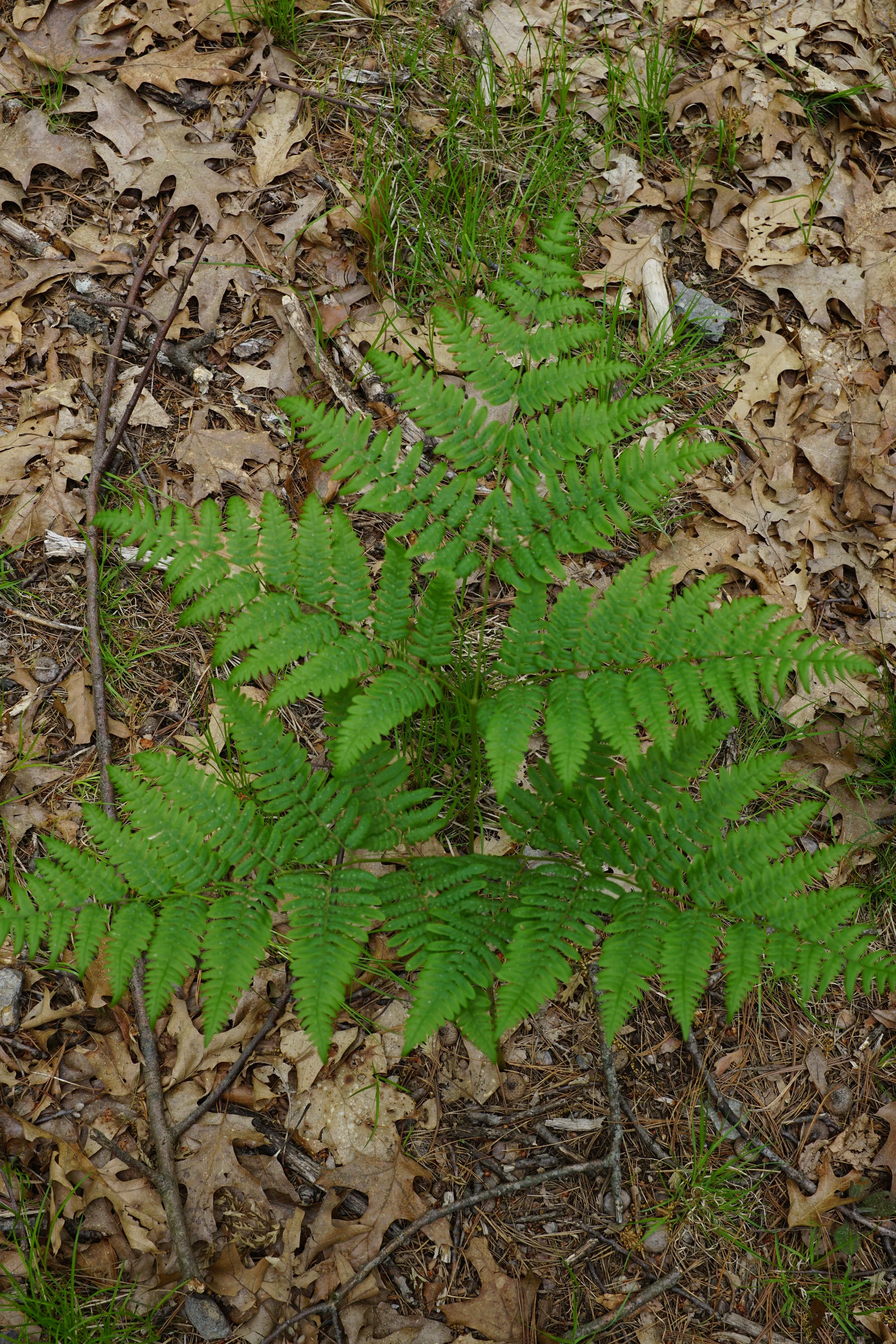
Frond of bracken fern: Pteridium aquilinum var. latiusculum.
Charles Darwin’s On the Origin of Species does not primarily tackle the question proposed in the title. Species arise from the process of speciation: one species splitting into two. However, a lineage can evolve - change over time - without splitting. This is like a home remodel compared to a division of a house, the house can continue to change (remodel), but it does not split into two dwellings. This remodeling is one of the main foci of Darwin’s Origin book. Evolution is a creative or anagenetic process that generates new structures, and importantly, can occur without the origin of a new species. The subtitle of Darwin’s book explains how evolution occurs: natural selection as a driving force for adaptive forms. Central to the pursuits of evolutionary biology is a deep understanding of the exact mechanisms of how new forms arise. This question is often taken for granted - especially now with an overwhelming utilitarian zeitgeist. For instance, it may seem elementary to ask “where did the turtle’s shell come from?” or “how did petals arise?” but these are the foundational questions that allow us to understand how evolution actually works. From an anthropocentric viewpoint, a deeper understanding of evolution has immense downstream benefits. For instance, breeding better crops/livestock and developing more sophisticated artificial intelligence are all enhanced by an understanding of evolution and natural selection. But more importantly, it allows us to answer one of the most essential questions of humanity: how did we get here? This is an evolutionary question. Darwin explicitly avoided tackling this question in the Origin, but it was an inevitable topic that he helped unleash. This essay is not about human nature or existential life questions. It is about a fern, and the tiny pores that it uses to secrete nectar.
Darwin’s theory was built on processes he leveraged from Charles Lyell’s Principles of Geology - namely how slow, quotidian processes could scale up into much larger phenomena. In that same light, he spent most of his time conducting small-scale experiments ranging from the way plants climb to how earth worms create soil. These were not insular endeavors, but part of a broader systematic approach to understand how nature works - how small-scale processes add up. He was, in a way, putting himself through the same processes that move mountains: incremental accretion.
One of Darwin’s household experiments, that I find quite interesting, was his exploration of ants and Dennstedt’s bracken fern. In the appendix of a paper on ants and acacia plants, Charles Darwin’s son, Francis Darwin, explains how his father observed ants visiting small glands on the fern. Francis remarks, “The following observations on this point were made by my father. June 8th. ‘Examined several ferns with Myrmica on them, and found the glands quite dry. Brushed off the ants, and in from 5 to 6 minutes distinct drops of secretion were formed.” On the same day he repeated the observation, and found that the drops of secretion were, as before, reproduced in 6 minutes.” This experiment prompted questions about the nature of these glands, what they were secreting, and why ants were attracted to them.
As I was finishing my PhD in May 2022, I would spend long afternoons botanizing around the grounds of the Arnold Arboretum, Harvard’s living tree museum. I enjoyed the cast of main woody characters, but it was the herbaceous understory plants that gripped my attention. One early spring day, I was botanizing through the shaded Conifer Path past a patch of bracken fern. I sat down on a wooden bench umbrellaed by Rhododendrons and Scrub Pines (Pinus virginiana). I noticed the bracken fern pushing up fiddleheads that looked like fish hooks emerging from the soil. Like Charles and Francis, I noticed dozens of ants crawling up and down the miniature croziers as if they were frantically patrolling a crime scene. As I pulled out my hand lens and got my knees muddy for a closer look, I saw that during their patrol they kept hovering around the junction where the leaflets merge with the main part of the leaf (also called the rachis-costa junction). These sites on the plant were slightly elevated and had a rich purple color. The ants looked like they were harvesting something accumulating at this junction. I tried to find a frond that wasn't covered in ants, and sure enough, I saw a droplet of shiny viscous liquid accumulated where the ants were foraging.

Darwin’s illustration of Pteridium aquilinum nectar glands from F. Darwin, 1876. g: glands, p: leaflets
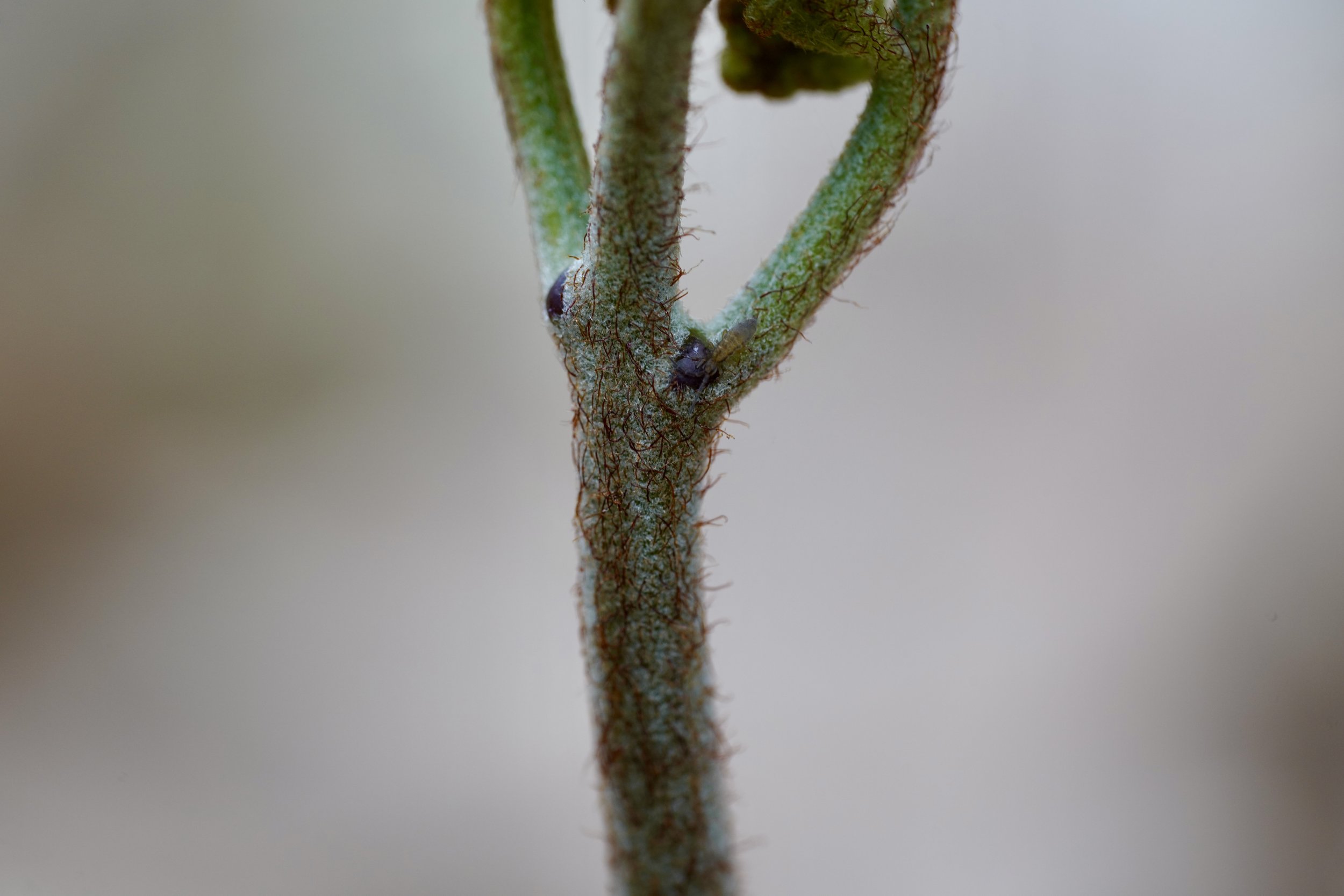
Image of Pteridium aquilinum nectary secreting nectar - strikingly similar to Darwin’s diagram.
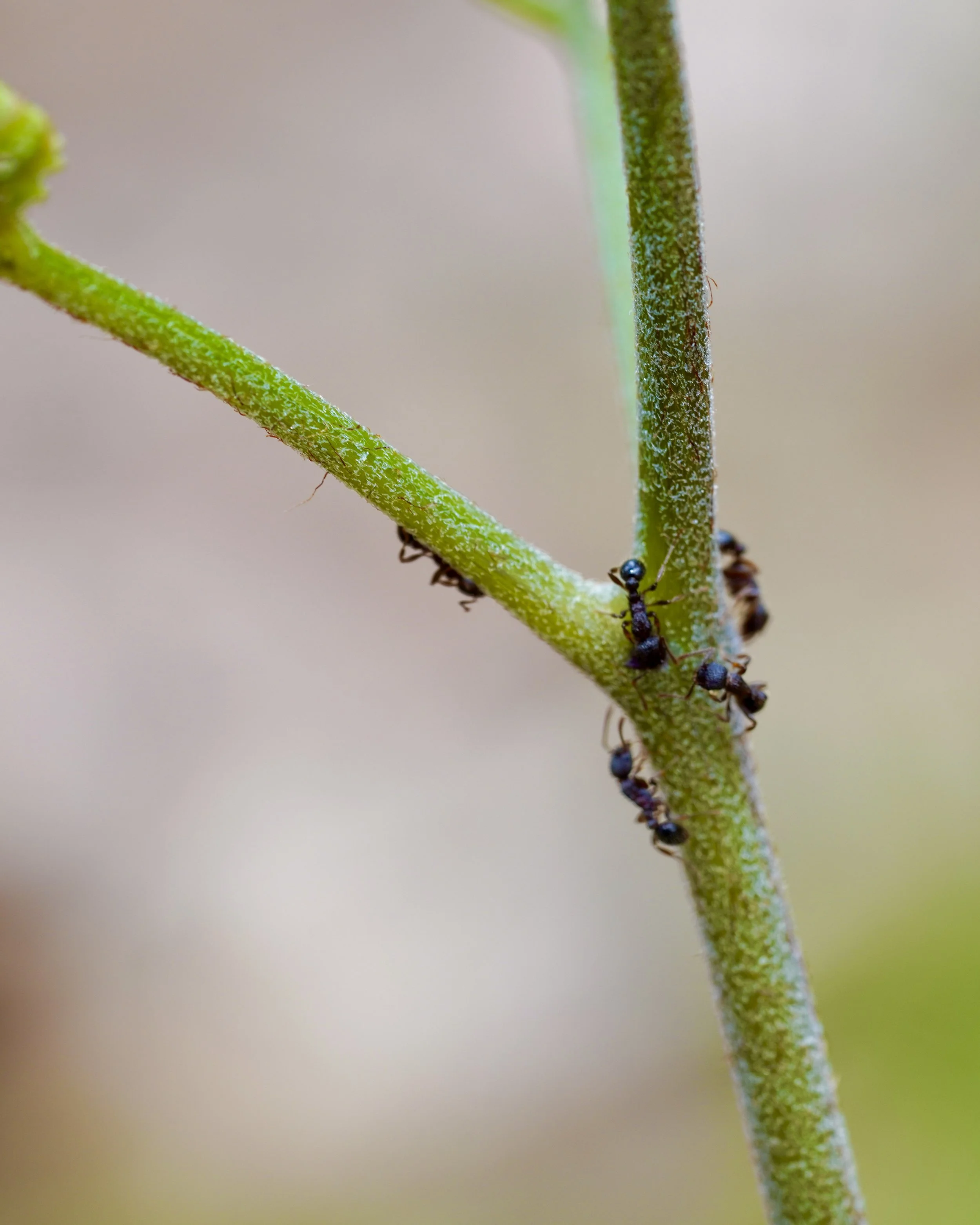
I am no entomologist, but I’ve seen this behavior in ants before. As a kid, I would eat a lot of Freeze Pops - which I eventually learned was just a hypersaturated frozen sugar solution with a dab of artificially coloring. I was pretty messy and would drip the liquid all down my hands and onto the ground. I recall that within minutes, ants would swarm my mess in a similar frantic state. I thought back to those hot summer days, and wondered if this fern was secreting some sort of sweet sap. I gave it a lick. Maybe I shouldn't have, as bracken is known to be quite toxic, but the temptation was too strong. It was, in fact, sweet. This fern was secreting a sugary liquid droplet. Those glands that Darwin observed in the late 19th century were specialized structures called nectaries.
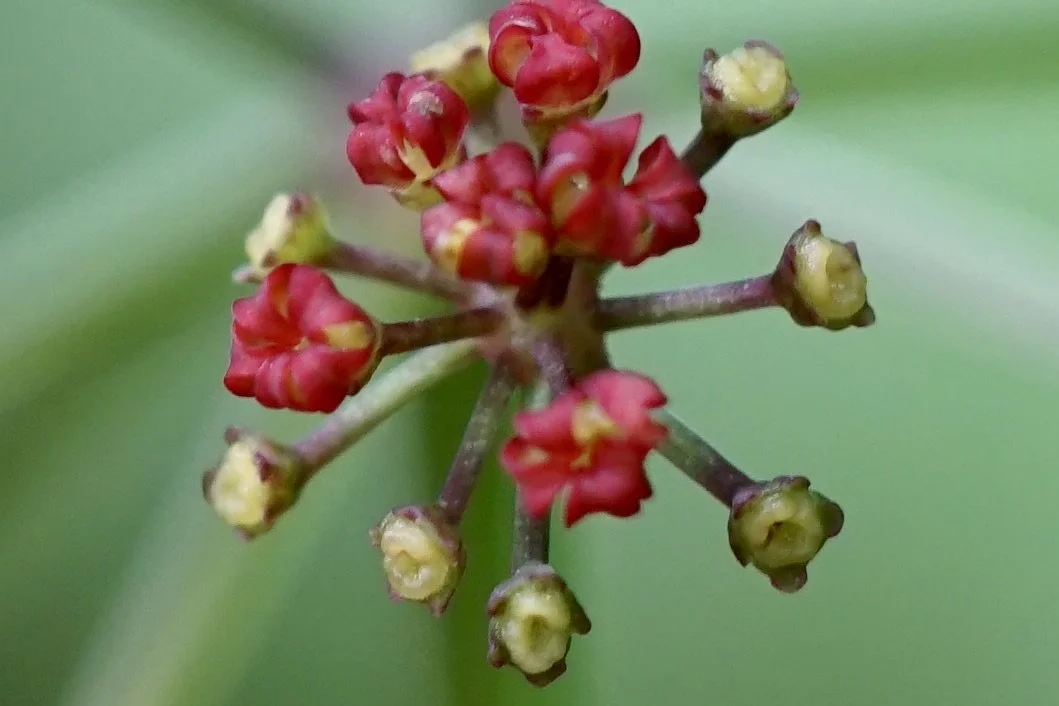
Nectaries are most commonly associated with flowers and pollinators. Every school child knows that bees visit flowers to collect nectar. The nectar is produced in small glands often at the base of the flower tube. In return for a bit of its sugar and the plant gets pollinated. While “nectary” is the singular name given to these glands, they are not a singular thing. Even in flowers, nectaries have evolved hundreds of times across flowering plants and each time they are associated with a different structure and way of operating. For instance, some nectar glands are produced on the base of the ovary in lineages like iris, while others are formed on the petals like in lilies. More than that, some of these glands secrete nectar from small epidermal hairs, while others have cells that fill up with nectar and rupture to release the sugary reward. Even the genes used to build them are distinct across different groups of flowering plants. The evolution of nectaries highlights two important points about the repeatability in nature (part of a broader discussion made popular by Stephen Jay Gould’s book Wonderful Life). In the case of nectaries, since they have repeatedly evolved numerous times presumably in response to enticing pollinators, we can say that secreting nectar is a predictable and repeatable evolutionary process. However, that is only true if we paint a broad brush of what a nectary actually is - a general secretion of sugar water. The fact that across the many times nectaries have evolved, they have done so in distinct ways shows us that, while evolutionary outcomes may converge on similar phenomena, the paths to evolve particular structures are heavily contingent on the stochastic processes of any particular lineage.
That is just the story of nectaries inside of the flowers. Many flowering plants also produce nectar glands outside of their flowers, usually on their leaves - these are properly named, extrafloral nectaries (EFNs). This occurs in plants like cherries (Prunus) or many members of the bean family (Fabaceae). These extra floral nectaries have fascinating functions - they attract ant bodyguards to defend them against herbivores. Some of my favorite studies are simple and elegant ones. None fit the bill quite like those which test the function of extrafloral nectaries. For instance, Professor Emeritus at Florida International University, Susanne Koptur, and colleagues simply covered nectaries on some leaves with clear nail polish and left others alone. They then quantified the amount of herbivory, number of ants on covered and non-covered leaves. From these simple experiments they observed that leaves with covered nectaries had fewer ants, more herbivores, and more herbivore damage. This suggests that non-floral nectar glands act in defense: bribing ants as bodyguards. The evolution of these nectaries as a mechanism to avoid herbivory is a fascinating example of cross-kingdom symbiotic relationships.
As Darwin observed, ferns too, have these nectar glands. At first though, this observation is counter to our general views of the simplicity of ferns. For instance, from the gardener to the scientist, it is often assumed that ferns lack biotic interactions. When asked what eats them, the response is usually “nothing.” But the Florida fern moth (Callopistria floridensis) would beg to differ. Likewise, there is an entire group of moths (Cuprininae Lepidoptera, Stathmopodidae), that specialize on fern spores. In 2022, Fuentes-Jacques and colleagues aggregated a dataset of insects that feed on ferns that amassed over 800 distinct species. Like all other plants, ferns must deal with the ability of growing as sessile organisms and they must evolve strategies to deter organisms that want to eat them.
Ferns and flowering plants have been on their own evolutionary trajectories for over 400 million years; this was the last time they shared a common ancestor. Their independent evolution of nectar glands represents an impressive degree of convergent evolution - the process of two distinct lineages evolving the same structure, think wings in birds and bats. Nectaries have evolved thousands of times across the flowering plants and dozens of times across the ferns. This lability of nectary evolution suggests that nectaries are relatively easy to evolve. But it also raises the question of how they evolve. When they evolve, do they always evolve in the same way or do they undergo distinct mechanisms of development?
Just like floral nectaries, there are numerous ways to build extrafloral nectaries. The types that develop in Pteridium aquilinum provide insight into how complex structures can arise. If you zoom in very close to the glands on bracken fern you will see that they are full of small pores. These pores look like other pores on the plant body: stomata. Stomata are the mouths of the plant body. They typically occur on leaves which function primarily for gas exchange. They open during the day, allowing CO2 to enter the leaf and O2 to escape. I wondered whether these pores that are secreting nectar in bracken fern could be the exact same structures as laminar stomata, but just repurposed for nectar secretion. I proposed to explore this phenomenon to the National Science Foundation, and they awarded me with a fellowship to do so in 2022. Working with my colleague Fay-Wei Li at Cornell, we sequenced the genes in developing nectaries. We found that the same genes used to build stomata in leaves are also used to build nectar glands. This seemingly small observation has pretty big implications for how these structures evolved.
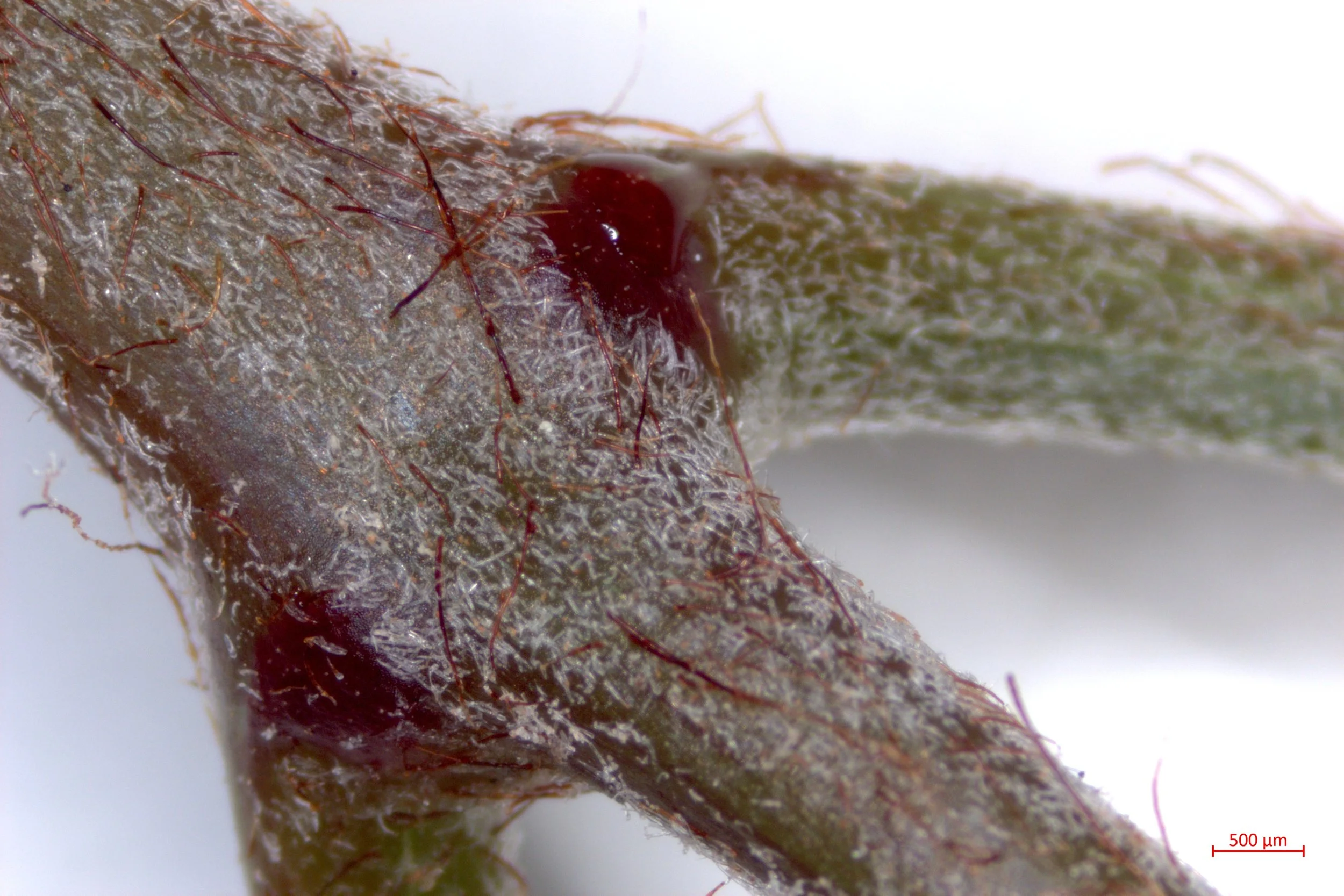
Nectar secreted from bracken fern nectary.
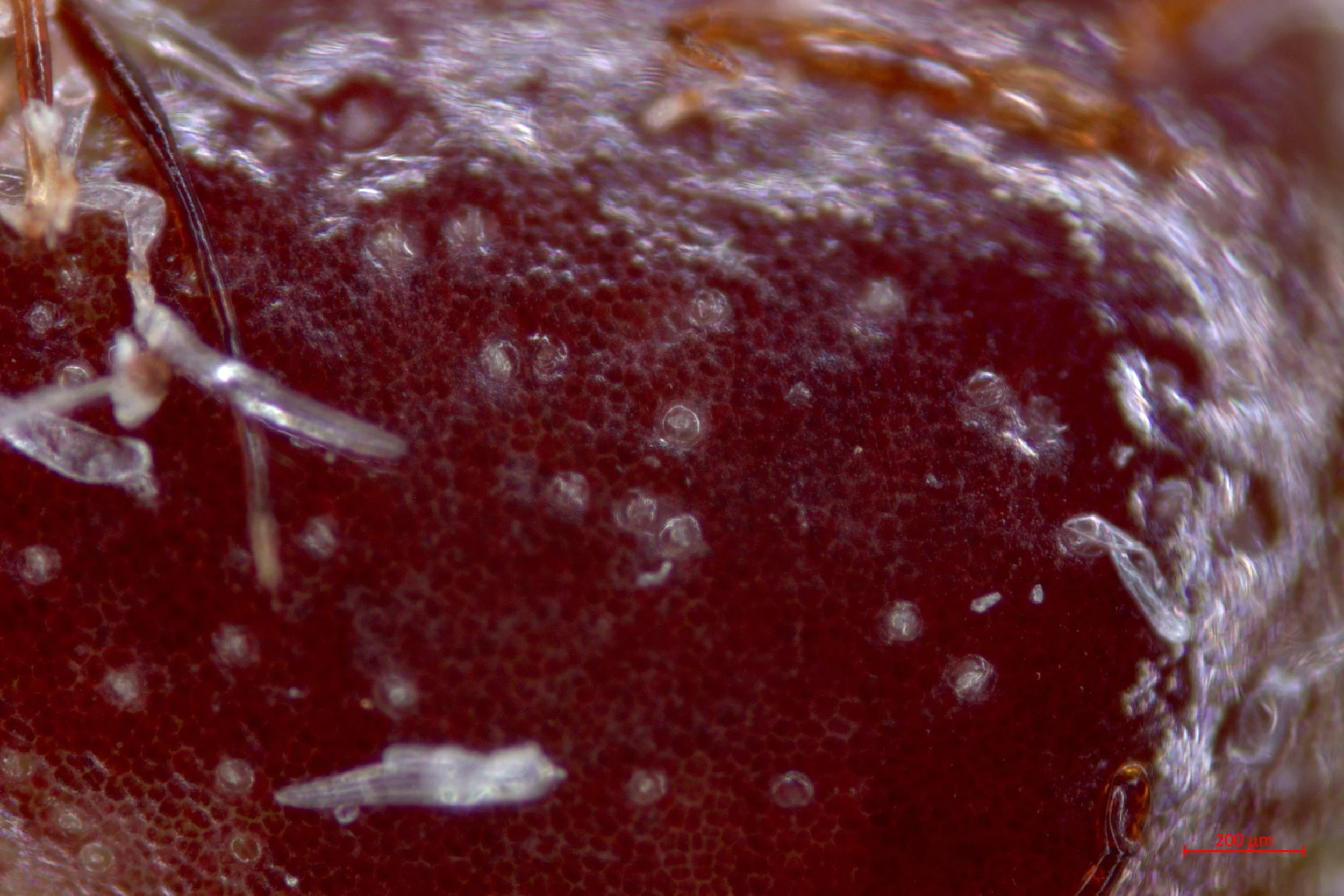
Stomatal pores (lighter regions) zoomed in on the nectar gland.
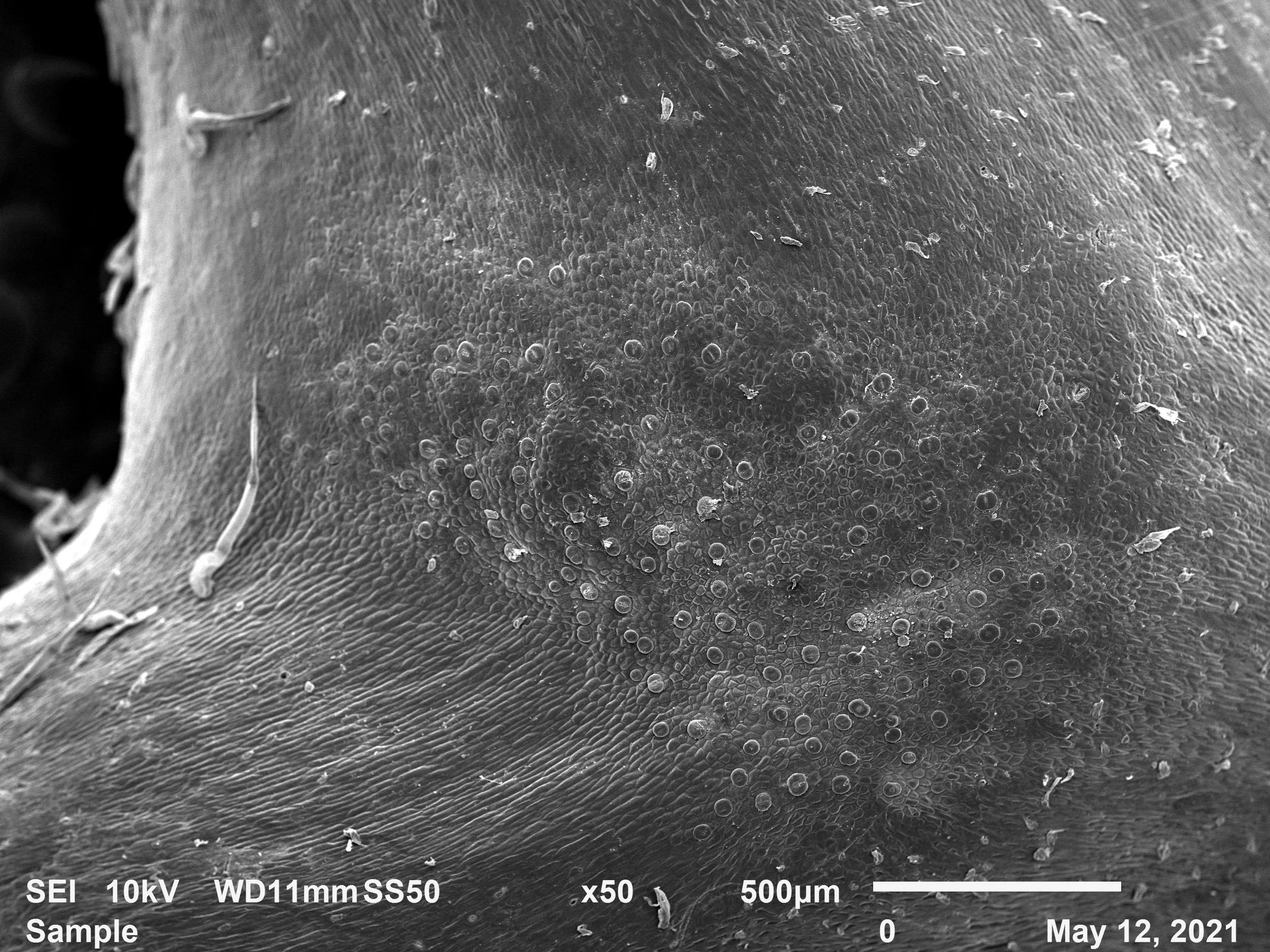
Stomatal pores visualized in scanning electron microscopy.
If these pores used to secrete nectar are bonafide stomata, it implies that these structures were co-opted from their ancestral function (gas exchange). When a structure has been co-opted for a wholly separate function it is called an exaptation. Darwin knew about this process as he articulated that “an organ originally constructed for one purpose... may be converted into one for a wholly different purpose” (On the Origin of Species, Ch. VI P. 190). However, Stephen Jay Gould and Elisabeth S. Vrba get the credit for coining the term in 1982.
Exaptations occur quite rampantly across the tree of life, for instance, feathers in birds evolved for thermoregulation but later became co-opted for flight; milk patches in mammals were derived from ancestral sweat glands; and petals in flowering plants have evolved from modified leaves or stamens. Goethe’s “alles ist blatt” is rooted in the idea of co-option. All is a leaf, just move it around a bit. What is interesting is that in these examples of exaptation, the ancestral trait doesn't need to be lost for its original function even after it was co-opted. In these cases, mishaps occurring in the developmental process can lead to the expression of a structure in a different location on the organism. This phenomenon is called heterotopy and it is an important developmental process that can produce new phenotypes, providing novel variation for natural selection to act upon. In the case of the bracken fern, it seems that some developmental anomaly occurred in the common ancestor some 15 million years ago, where instead of just producing stomata on the leaves, they also heterotopically developed stomata on their rachis-costa junctions (places where they normally should not be developed). Over evolutionary time, these mutant plants with odd-placed stomata, evolved to secrete nectar from these pores, thus co-opting them as nectaries.
Heterotopy and exaptation may work together beautifully. Heterotopy is a mutation in the developmental process. More often than not it would lead to an organism that is quite different from the rest; imagine a fruit fly developing a leg where its antenna should be. But, every once in a while, heterotopy could land on something unique that is not detrimental to the organism. If, in fact, it is advantageous for the organism, beneficial heterotopy could be a consistent route to exaptation. The 20th century French Biologist François Jacob likened evolution to a tinkerer, “a tinkerer who does not know exactly what he is going to produce but uses whatever he finds around him whether it be pieces of string, fragments of wood, or old cardboards; in short it works like a tinkerer who uses everything at his disposal to produce some kind of workable object. For the engineer, the realization of his task depends on his having the raw materials and the tools that exactly fit his project. The tinkerer, in contrast, always manages with odds and ends. What he ultimately produces is generally related to no special project, and it results from a series of contingent events, of all the opportunities he had to enrich his stock with leftovers.” It is in these quirks of nature where we see ample evidence for the process of evolution. Why else, besides the contingency of a lineage’s evolutionary history and the tinkering of development, would a nectary be built out of pores originally used for gas exchange?
Further readings and references:
Baum, David A., and Michael J. Donoghue. "Transference of function, heterotopy and the evolution of plant development." Developmental genetics and plant evolution 52 (2002): 69.
Benton, Michael J., et al. "The early origin of feathers." Trends in ecology & evolution 34.9 (2019): 856-869.
Darwin C. 1859 On the origin of species by means of natural selection, or the preservation of favoured races in the struggle for life, 1st ed. London, England: John Murray.
Fuentes-Jacques, Luis Javier, et al. "A global review and network analysis of phytophagous insect interactions with ferns and lycophytes." Plant Ecology 223.1 (2022): 27-40.
Goethe, Johann Wolfgang von. Goethes Werke. Part 3. Weimar: H. Böhlau, 1894.
Gould, Stephen Jay, and Elisabeth S. Vrba. "Exaptation—a missing term in the science of form." Paleobiology 8.1 (1982): 4-15.
Jacob F. 1977 Evolution and tinkering. Science 196, 1161–1166.
Koptur, Suzanne, et al. "Nectar secretion on fern fronds associated with lower levels of herbivore damage: field experiments with a widespread epiphyte of Mexican cloud forest remnants." Annals of Botany 111.6 (2013): 1277-1283.
Kramer, Elena M., and Vivian F. Irish. "Evolution of genetic mechanisms controlling petal development." Nature 399.6732 (1999): 144-148.
Oftedal, Olav T. "The evolution of milk secretion and its ancient origins." animal 6.3 (2012): 355-368.
Ronse De Craene, Louis P., and Samuel F. Brockington. "Origin and evolution of petals in angiosperms." Plant Ecology and Evolution 146.1 (2013): 5-25.
Shen, Zong-Yu, et al. "Systematics and evolutionary dynamics of insect-fern interactions in the specialized fern-spore feeding Cuprininae (Lepidoptera, Stathmopodidae)." Molecular Phylogenetics and Evolution 194 (2024): 108040.
Suissa, Jacob S., Fay-Wei Li, and Corrie S. Moreau. "Convergent evolution of fern nectaries facilitated independent recruitment of ant-bodyguards from flowering plants." Nature Communications 15.1 (2024): 4392.
Zelditch, Miriam L., and William L. Fink. "Heterochrony and heterotopy: stability and innovation in the evolution of form." Paleobiology 22.2 (1996): 241-254.
Edited by Ben Goulet-Scott